For bookstore lovers: A Thousand Lives

this is a test

Bookstores sustain me–it’s an obvious statement to look at it, but perfectly true. When I first moved to Philly back in 2008 I didn’t feel comfortable until I learned where the bookstores were, first those in my neighborhood, and later on all the other ones around the city. (There are so many good ones and I’m devoted to so many I won’t name a whole bunch because it’ll turn into a silly game of favorites!) I even organized and led an independent bookstore crawl about five years ago. It was so much fun and I hope to do another one some day.

For me these are places where special things will always happen, where I’ll return over and over again, often to get away from things I think I need to avoid for a while, and of course I get to meet folks there and chat and learn about great books or just random things I’ve never heard of.

So being a bookstore sort of person it was inevitable that I’d eventually write at least one short story about them and try to get at what they mean to me, or a version of me. Recently, Jared Daniel Fagen, founder of Black Sun Lit, was kind enough to publish my flash fiction, “A Thousand Lives,” about bookstores, desire, and in a way, eternity. (A certain West Philly bookstore plays an anonymous role in it.)

Black Sun Lit has an impressive archive of online work to explore, and the first issue of their print journal, “Vestiges,” is forthcoming.

Thanks for taking a minute to check out the story. It’s fiction, but entirely true in many ways, too, of course.
‘Ray Apada’ now online

grandesferadigiornali

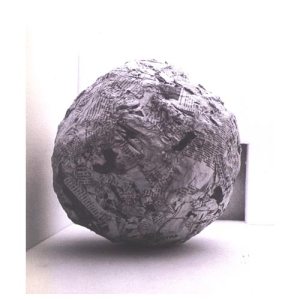
I’m pleased to say that my short story, “Killing Off Ray Apada,” is now available online. It first appeared in print last year in the first issue of gorse, a literary journal based in Dublin.

The story is about friendship, college, art, and regret. Many thanks to gorse editor-in-chief Susan Tomaselli for publishing it online.

If you enjoy experimental writing and haven’t checked out gorse, it’s high time you did. They assemble incredible poems, stories, interviews, and essays for each issue. You can pre-order issue no. 3 now and copies of no. 2 are still available.

Support Asymptote & world literature today

If you’re a fan of translated literature you probably know of Asymptote, a free online journal that brings the world’s literature to life (in English translation) four times a year with massive editions packed with fiction, poetry, drama, criticism, interviews, and original art. Our fundraising campaign needs your help!

We’ve published work from 93 countries and 65 languages. Our archives include original work by incredible writers, and many Nobel Prize-winners, such as Anne Carson, Can Xue, Laszlo Krasznahorkai, J.M. Coetzee, Lydia Davis, David Mitchell, and many many more. But we need your help! We’ve crossed the $22,000 mark but only have until MIDNIGHT TONIGHT to reach $25,000.

We’re giving away many exciting perks, from literary care packages to designer AsympTOTEs. But best of all, you get to support world literature with your tax deductible donation. Hurry—our campaign ends at MIDNIGHT! (If you’re wondering why I keep saying “our” — I’m Asymptote’s interviews editor!)

Also, our January issue drops tomorrow. The video above gives you a sneak peek, but here’s a summary:

Our 4th Anniversary issue stars our Danish Fiction feature, powerful writing from Afghanistan and Syria, Boyd Tonkin on Jenny Erpenbeck, Platonov translated by Robert Chandler, Wang Anyi translated by Howard Goldblatt, three-dimensional poetry from Iran, an interview with David Damrosch, and so! much! more!

Please share the link or better yet make any size donation you can. Thank you! (Our twitter handle is @asymptotejrnl btw!)

gratitude, 2014

I’d like to say thanks for following the blog this year and reading a few of my posts. I’m looking forward to checking out more of everyone’s work in 2015.

As for the rest of this post, I’ve been incredibly fortunate this year. I got to work with dozens of people who challenged and supported me and, perhaps most importantly, contrary to the past five years or so, no one close to me died. (Raps knuckles to temple.)

To gear up for the work ahead I took a little time to record good things from 2014 in the hope of building on them. And that goes for everything from writing/art projects to more social activism. Here’s a recap in a link-heavy chunk of text. Thanks again for reading truce in 2014!

January: after 30+ subs I sold my first short story,Killing Off Ray Apada,” to gorse (thanks to editor Susan Tomaselli); was featured in The Guardian’s story,Year of Reading Women Declared (thanks to Joanna Walsh and Alison Flood); edited interviews with Anne Carson and Yoshitomo Nara for Asymptote.  February: Continue reading

Microinterview with Nell Zink

Photo credit: Fred Filkorn

I interviewed Nell Zink, author of The Wallcreeper, for The Paris Review’s blog. It’s one short question from me, one long lovely answer from her. (That’s not the whole story, of course, but it makes for a good one.)

What kind of jobs have you had? Do you write full-time now, “living the dream”?

I was always a bit concerned about purity of essence. I never wanted a job that might affect the way I wrote or thought. I remember how in college I was very proud of having finagled a job in the English department, where I spent most of my time collating and stapling. I didn’t major in English, obviously, because I preferred being challenged in courses where I might get bad grades. Once, Gordon Lish came to speak there and warned us explicitly against going to work in publishing, because it forces wallcreeperyou to read bad prose all day every day and spoils your style. After his talk, all the other student writers jumped up to beg him for jobs in publishing while I wandered off strengthened in my resolve to do manual labor.

Read the whole thing at The Paris Review: Purity of Essence: One Question for Nell Zink.

An interview with David Winters

What motivations shape a critic’s decisions to write about the books they defend and those they dismiss? And what are the ethical or moral dimensions of those decisions? Beyond mere conflicts of interest, what lines do they draw for themselves in their work? Are there personal forces or experiences that affect their preferences about what to read and review?

In this ongoing series of interviews with critics, one of the central questions will be, “What is a critic’s role?”  It’s a broad question, open-ended, but one which can be used, if the critic chooses, to address the personal side to their lives as critics, and perhaps how they see their work affecting society and culture.

For the second post in this series, I’m very pleased to present an interview with David Winters. Our conversation took place over email in recent months.

David Winters is a literary critic living in Cambridge, England. His reviews, essays and interviews have appeared in a wide variety of print and online publications, including the Times Literary Supplement, The Guardian, The Literary Review, The White Review, The Quarterly Conversation, and the Los Angeles Review of Books. A collection of his literary criticism, titled Infinite Fictions, is forthcoming from Zero Books in January 2015; it can be pre-ordered here. He is currently co-editor in chief of 3:AM Magazine, where he commissions criticism and nonfiction. He can be found online at davidwinters.uk.

Continue reading