Invincible [new fiction]

Here’s a tiny story I wrote. Only publishing it here. Thanks for reading it!

Invincible

The school bus made of fire stopped at the stops to pick up the children. One by one the kids all got on. The flames caught them in a bright orange embrace and as they sat down an incredible sky-blue glow formed around each young body.

As usual, none of the kids or parents screamed. It would take much worse than this to bend them out of shape; the children were, after all, made of glass: tempered, stained, bullet-proof.

The school bus drove across the snowy town of steel and brick. The children bounced along warm and bright, looking around with clear eyes, fearing nothing. Already they were trading stories. Your Dad said what? Your Mom hit who?

A few thoughts on #MyWritingProcess

Last week Kateywrites kindly invited me to take part in the ongoing discussions people are having about #mywritingprocess, answering four questions about themselves and their work. I’m still new to blogging and I’ve never written about this sort of thing before, but wanted to give it a shot. So here are my answers. Thanks for reading, and be sure to check out Katey’s writing at the link above!

1. What am I working on?

I’m at work on a novel called “The Designer,” based on this short story published last year by Corium Magazine. It’s about three friends who, at age 40, decide to leave San Francisco and move to Berlin using money they inherited after the death of their parents. It’s about love, expats, mirror-writing, art, grief, translation, and mysterious party guests.

In nonfiction, I’m working on an experimental review for the Irish literary magazine, gorse. Experimental how? It continues the narrative begun here at 3:AM Magazine last year. I’m also working on a review about Brazilian writer Hilda Hilst.

2. How does my work differ from others of its genre?

My fiction tends to include fantastic or improbable elements in order to create an original story and try to put characters in situations that show human behavior in a new light. A perfect novel to me would be a blend of Tove Jansson, Virginia Woolf, and Amelie Nothomb.

In nonfiction, I’m devoted to the #readwomen2014 movement (which I discuss a little bit in this article for The Guardian). So I’m only reading and reviewing books by women in 2014. As a literary critic, I’ve been focused on translated literature for a while now, and I tend to like shorter, more experimental books or novellas. By choosing these kinds of books it definitely affects the tone and tenor of my criticism, as an attempt to look at sexism both in publishing and society.

3. Why do I write what I do?

This novel is definitely based in part on my interest in travel and art and displacement, which crosses over into personal territory as well: grief, anxiety, friendships, hope through creativity, and more. My reviews are part of an effort to celebrate translated literature, of which little is published in the U.S., and add something to the broader discussion about literary culture. This effort tends to keep me focused on small presses and independent presses. And focusing on books by women, deliberately ignoring the mass media coverage that tends to tout books by men, I hope to write about authors I might not otherwise discover.

4. How does my writing process work?

I like writing in the morning, but will use any free moment I can get. I do most first drafts and note-taking by hand. There’s something about putting ink on paper by hand that is still very magical for me. Then I type things up to read and edit on-screen, but will still print things out and scribble them up by hand as stories develop. I find taking a red pen to a printed document lets me distance myself from the work, reading things out loud, hearing how certain passage resonate within the whole idea of where a story or review is heading.

Since I have a toddler, work full-time, and edit a section of the translation journal, Asymptote, I rely on small bits of time to keep my short stories, reviews, and the novel moving ahead. I try (and usually succeed) not to get too anxious or upset when it feels like I don’t have large blocks of time to write like I used to. If I get a little window to work I’ll tinker with an outline or revise a couple pages of something, or re-read an important chapter in a book I’m reviewing. Those small things add up and overlap: research for a novel will illuminate things for me in my criticism, and revising part of a short story can give me a better appreciation of what I see other writers trying to accomplish. So I guess I like having multiple projects going on at once, though it does feel overwhelming at times. Taking a day off from writing is very nice, too. Just reading or getting away from words altogether. Being a father, husband, and taking care of an old rowhouse in West Philly provide plenty of chances to get away from all that!

Many thanks again to Katey for telling me about this and inviting me to participate! Here’s a link to her post about #mywritingprocess.
Another view of ‘truly audacious’ novels

Earlier this week I read in The Kenyon Review Online Scott Esposito’s review of “Blinding” by Mircea Cărtărescu.

Here’s the opening paragraph:

Increasingly, the truly audacious novels published in English are not originally written in this language, but are translated into it. Consider the projects that have appeared here in just the past five years: the My Struggle sextet by Norwegian author Karl Ove Knausgaard, thousands of pages in length and regularly compared to classics of Modernist literature. Roberto Bolaño’s 2666, an epic of language, geography, politics, and horror. Parallel Stories by Peter Nádas, over a decade in the making and an attempt to sum up all of postwar Eastern Europe. Mathias Énard’s single-sentence, 500-page novel Zone, telling the 2,000-year history of the Mediterranean. The baroque disasters brought to us by Laszlo Krasznahorkai . . .[author’s ellipses]

Scott and I have worked together. I’ve written for his journal The Quarterly Conversation several times and we’ve served as fiction judges together for the Best Translated Book Award.

When I read the paragraph above, I liked the strong focus on translated fiction, and wanted to nod in agreement with the hopeful implication (with that first word “increasingly”) that more and more people are reading great novels written by people all over the world. But I stopped when I got to the end of the first paragraph because the five names listed as examples of “truly audacious” writers are all men.

The piece doesn’t say that women aren‘t doing audacious work. It just doesn’t mention any women in its bold, opening statement about the importance of world literature.

I, too, have a stake as a writer, editor, and critic in promoting world literature and works in translation. But I don’t agree at all with the implication that meaningful, innovative work is only being done by men who write big books in other languages. (I tweeted as much after I read the review.)

By not mentioning any female writers in this opening statement, this rallying cry challenging the dominance of English-language fiction, while it’s something I would love to cheer, it unfortunately once again sets the tone that writing being done by women is not audacious enough, it’s off-the-radar and so unimportant that not even a single female author deserves to be mentioned in the same review as these guys.

Scott’s stature as a critic and The Kenyon Review‘s stature as a literary journal give these male-centric views a lot of weight. And on Twitter people have been tweeting links to the review quite a bit, at least in my circle of folks interested in world literature and translation. Some people seem very happy to tweet that opening line only. It’s very quotable, and well-written, and kind of exciting to see published.

In my opinion though, I want more attention to be paid to equality as we promote world literature. I want balance and fairness. It’s simply not enough to celebrate world literature and translated novels–it has to go beyond the big names of male authors who are easier to talk about, whom critics are more comfortable name-dropping because the whole business (publishers, festivals, media, and so on) generally favors the notion that male genius is inherently more valuable to literature. Maybe this is the danger of lists in general, especially in reviews. They short-change far too many authors, in this case women and any innovative, experimental writers in English whose work deserves to be translated and read in other languages.

“The list goes on,” Scott writes. And yes, the temptation in these types of situations is typically to respond with a new list, to sing out the names of books I admire by women, to counter the telling silence on the subject in this review.

But doing that would only reinforce the idea that lists are the answer and comparison is necessary. I imagine that it was the same for other people who read this review as it was for me: many names of female writers leaped to mind, writers who are not only doing audacious work, but whose challenges in the face of sexism make their successes seem all the more audacious for having survived tests of humiliation, and outright violence and hatred.

And in the interest of full disclosure, I have to say I took greater interest in this piece in particular because I have reviews of books by women forthcoming from The Kenyon Review Online.

Asymptote in Philadelphia

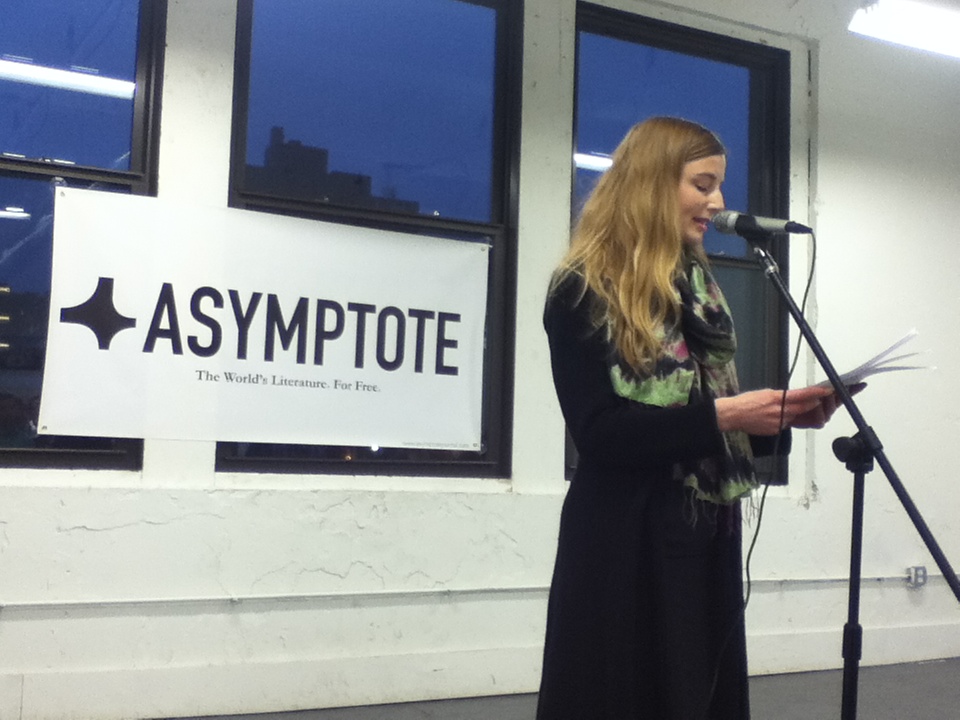
On March 29, I hosted the first-ever Asymptote event in Philadelphia. It was part of the journal’s worldwide celebration for its third anniversary and a large and enthusiastic crowd braved the rain on a Saturday night, making for a wonderful time at the Asian Arts Initiative.

Thanks to everyone who attended, and the four readers and musical guest who donated their time! Special thanks to Ann Tetreault of The Spiral Bookcase who did a superb job organizing books sales at the event.

IMG_2094

Author Hilary Plum (They Dragged Them Through the Streets) read a poem by Kym Hyesoon, “My Free Market” (trans. Don Mee Choi), and a new piece of her own fiction, “Cage.”

IMG_2098

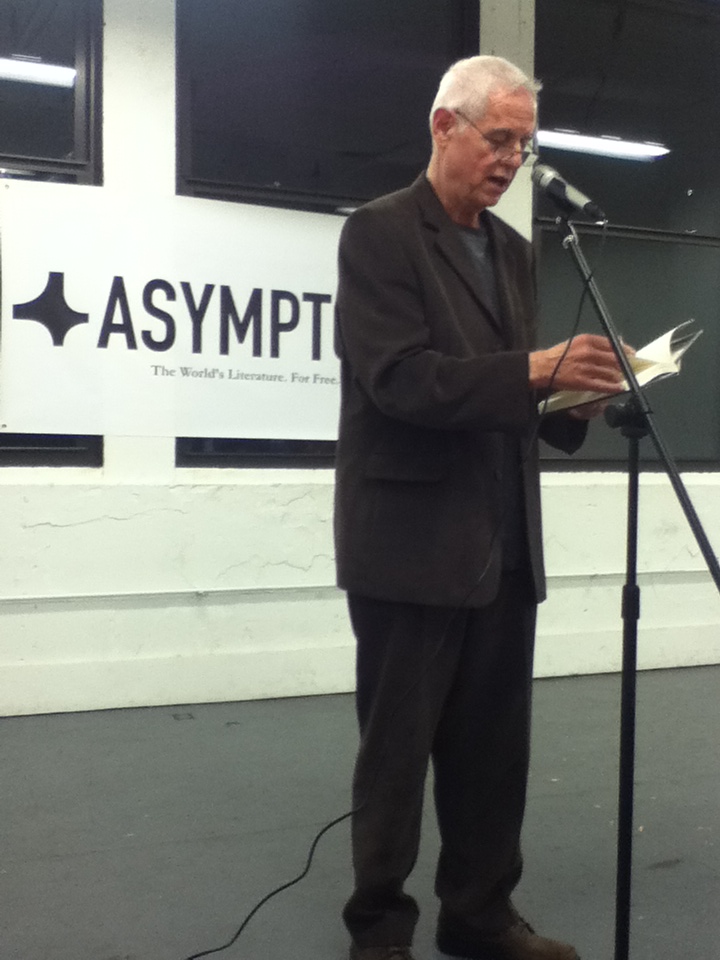
Author Ken Kalfus (Equilateral, Pu-239 and Other Russian Fantasies) read in Russian and English a poem by Aleksey Porvin, “A Dark House is Quietly Collapsing” (trans. J. Kates), and from his short story, “Coup de Foudre,” which appears in the April issue of Harper’s.

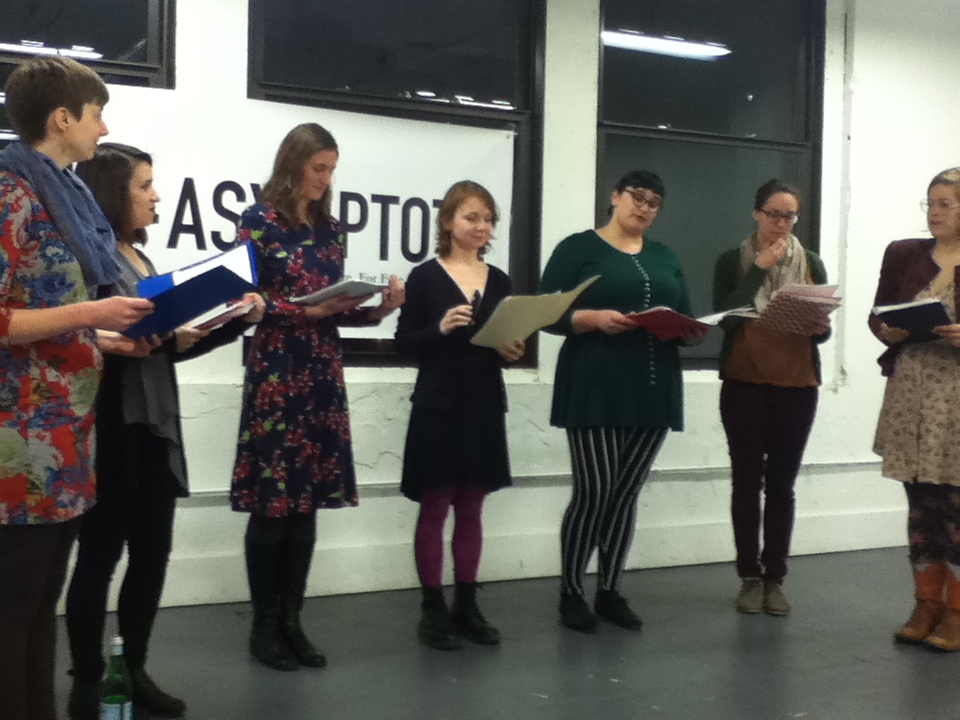
Seven members of The Philadelphia Women’s Slavic Ensemble sang three songs from Bulgaria and one from Croatia. It was stunning!

IMG_2120

Author Katherine Hill read an excerpt from Clarice Lispector’s Agua Viva (trans. Stefan Tobler), and from her novel, The Violet Hour.

Translator Vincent Kling read a series of excerpts from his 2013 Schlegel-Tieck Prize-winning translation of the late Swiss author Aglaja Veteranyi’s novel, Why the Child is Cooking in the Polenta. (Kling’s translation of Heimito von Doderer’s Die Strudlhofstiege is forthcoming from New York Review Books.)

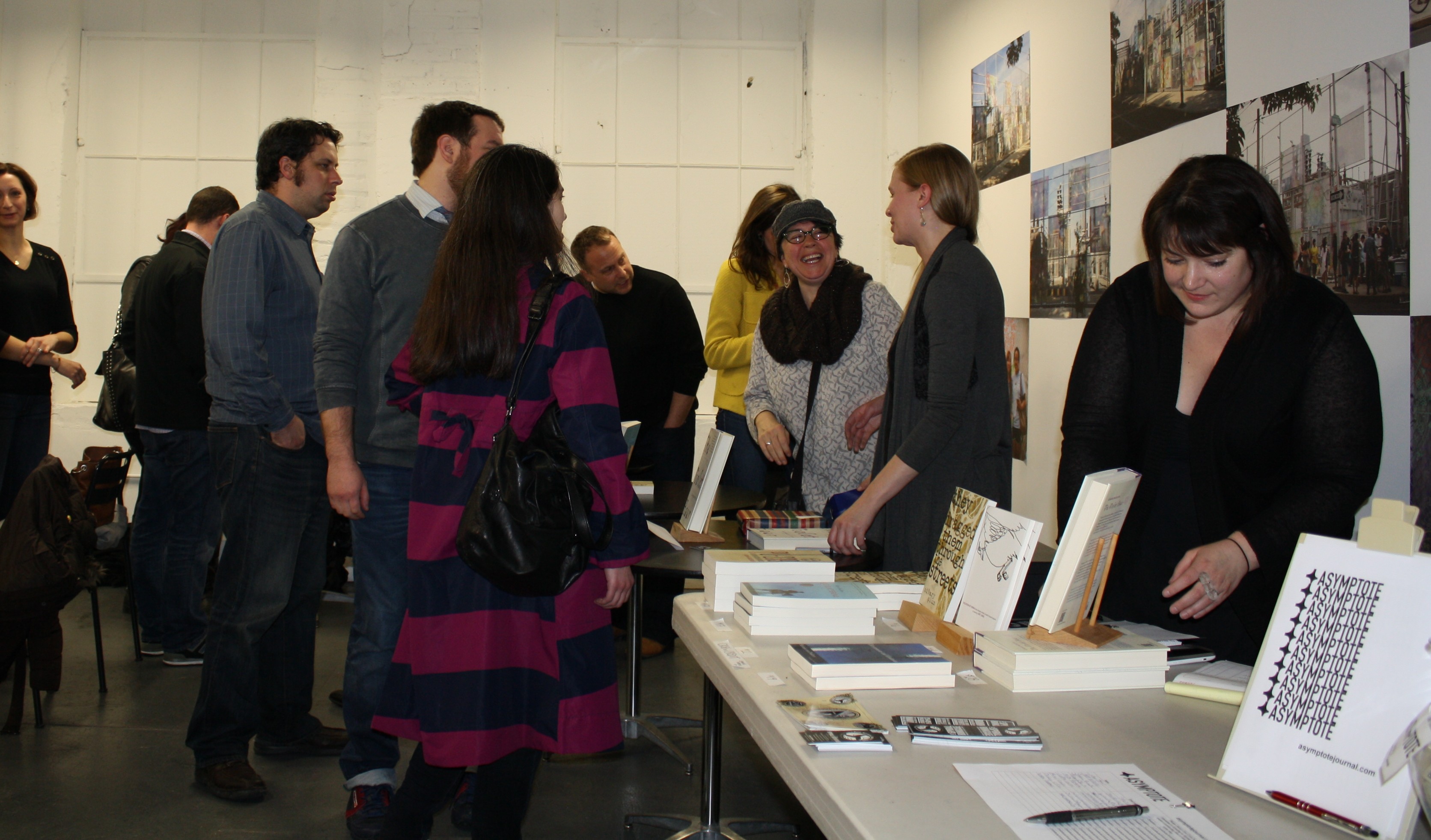
Ann Tetreault, right, of The Spiral Bookcase provided books by all four authors who appeared at the event.

gorse #1

gorsecurrentissue

This post is woefully overdue. But here it is, a couple months late.

I have a short story in the first issue of a wonderful new Irish literary magazine called gorse. It’s a print journal and it’s beautiful. Issue 1 was published in January and I cannot adequately express how pleased and humbled I am to have my words appear between the same covers as the other contributors. (See below.)

Do check it out, follow gorse on Facebook and Twitter, subscribe, and pre-order issue 2, which is due out in September. In short, put gorse on your list of magazines to watch. The editors, Susan Tomaselli and David Gavan, are off to a roaring start.

Table of Contents

[Essays]
The Magnet Has a Soul & Everything is Water, How Modernism is Ancient by Darran Anderson
The Run of the Streets by Karl Whitney
Appetite for Depletion, Thoughts on Michel Houellebecq by Rob Doyle
Various Assumptions, the Still Lives of the Artists by Kevin Breathnach
Close to the Edit, the Films of Nicolas Roeg by Richard Kovitch

[Interviews]
Evan Lavender-Smith by David Winters
Adam Thirlwell by Susan Tomaselli
Jesse Jones by David Gavan

[Fiction]
Inverted Yearning by Julie Reverb
Killing Off Ray Apada by Matthew Jakubowski
Vagues by Joanna Walsh (English) / Прошлым летом на море by Anna Aslanyan(Russian)
Oslo, Norway by John Holten
Thornback Ray by Desmond Hogan

[Poetry]
Six Poems From {Enthusiasm} by S.J. Fowler
Crocodile by Colin Herd

[Art]
The City by Stephen Crowe

***

Cover art: Niall McCormack

I’m very into you [book]

Picture

Kathy Acker
Photo by Del KaGrace Volcano

Kathy Acker fan? I can’t find any other links or sources online [yet] that verify that Chiasmus Press really is releasing the book, titled “I’m very into you,” this year, but I’d love to read it if they do, since it purportedly will feature “email correspondence that took place in 1995 between writers Kathy Acker and McKenzie Wark.”

At The Rusty Toque they break down what the book involves, including the intro from John Kinsella.

Here’s a sample Acker email:

Date: Wed, 9 Aug 1995 01:52:42 -0700
From: Acker@eworld.com
To: mwark@laurel.ocs.mq.edu.au
Subject: Re: portisheadspace
Oh will I remember all that you just wrote? Memory slips even more than…what?…
gender (is that self? not here)…and I was going to email, I can’t even remember
spelling, to just quickly tell you about the movie I just saw, Todd Haynes _Safe_…
and your email!…now I can’t remember all you said ‘cause I want to tell you,
emotion taking over, see _Safe_, it is WONDERFUL hits the spot (advertisers make correctness) makes the art world into the stupid nothing it is…well it is so great seeing something that good…I saw it with RU we’re friends again which is great ‘cause I
hate losing friends there aren’t enough and it is my family, my friends…so now all is dream…

Preparing for Impossible Books

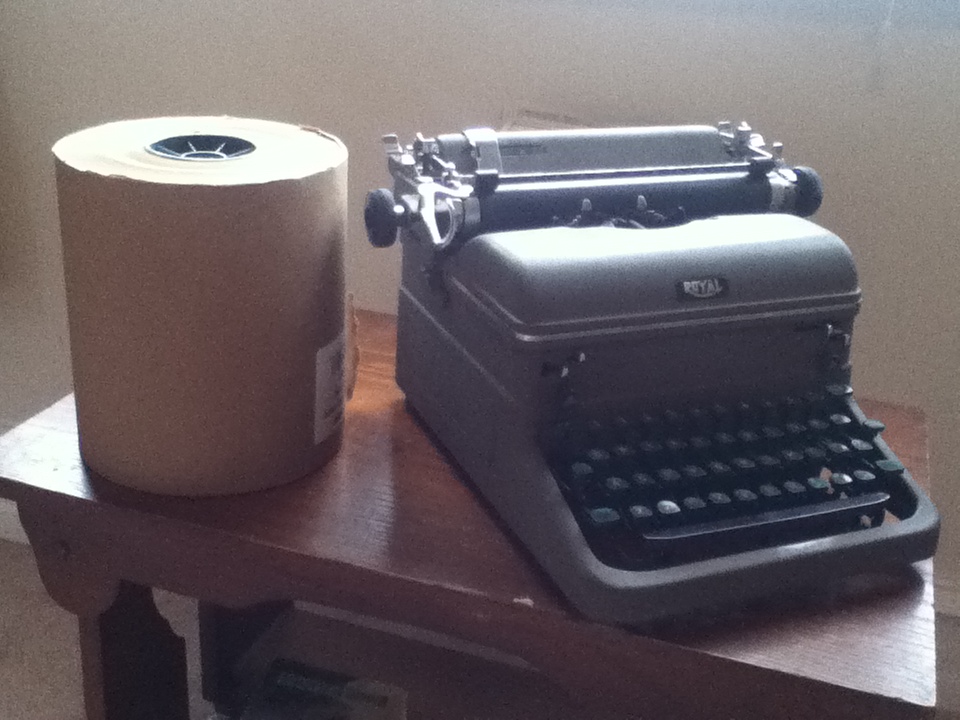
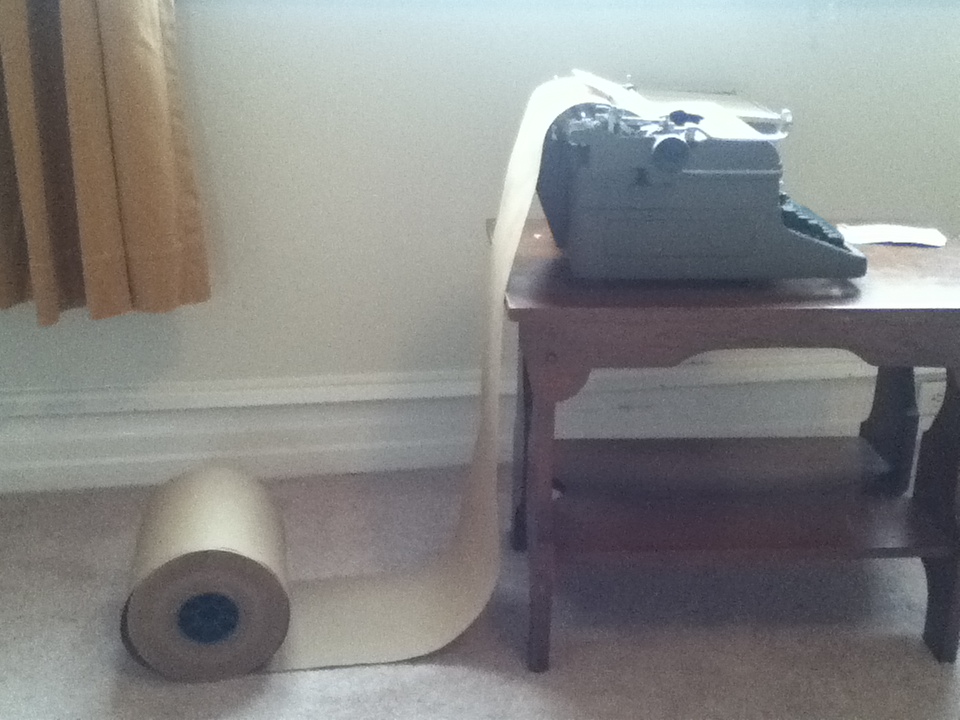
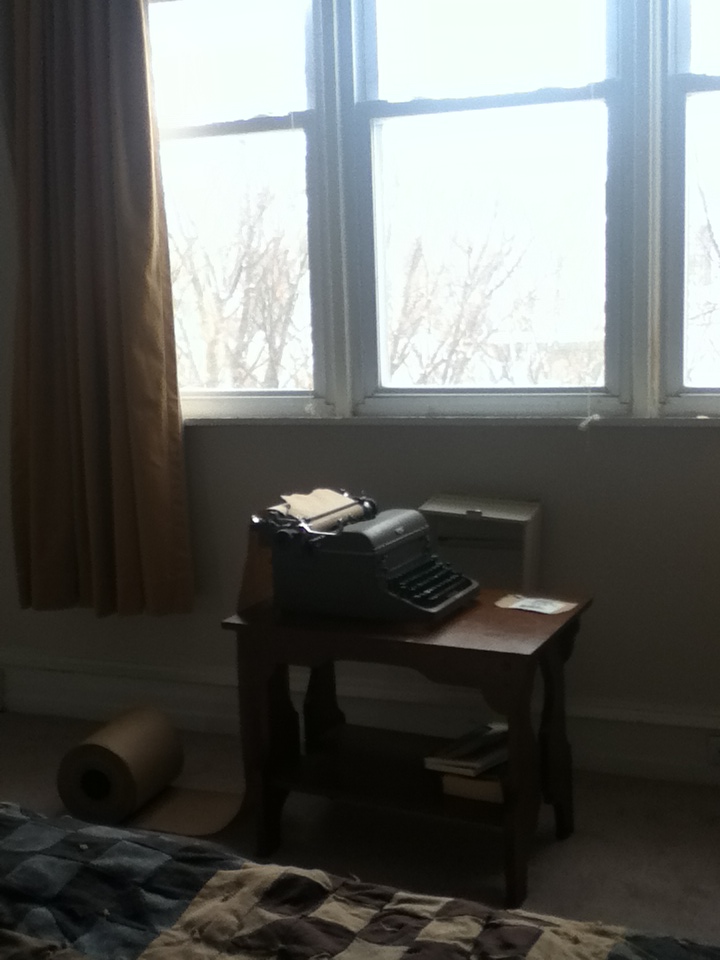
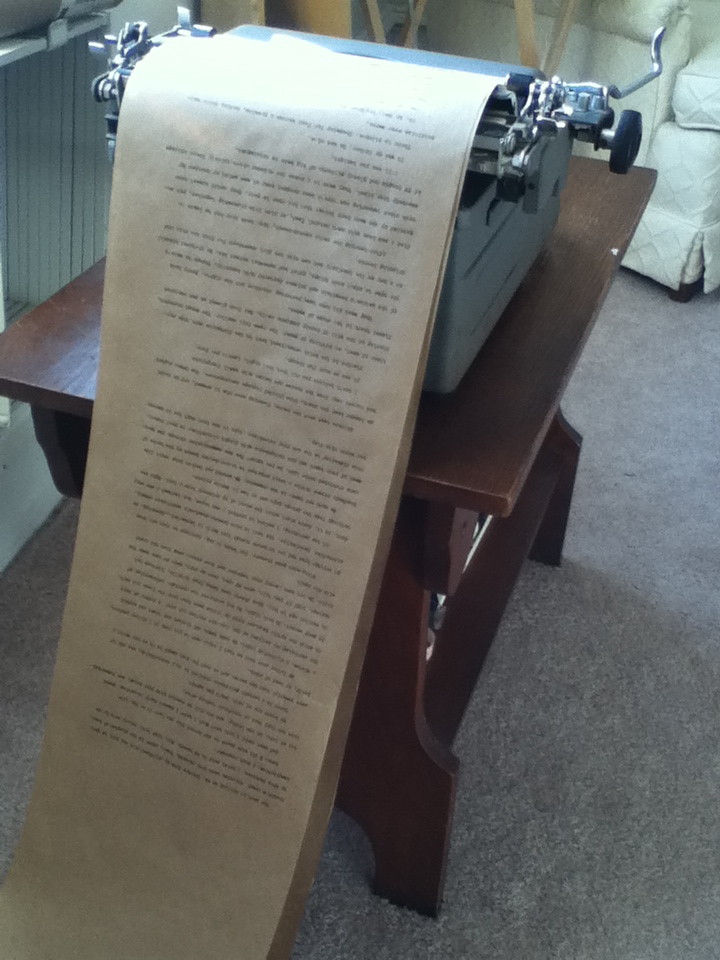
Just for fun, some photos of the paper, typewriter, and text-in-progress for my collaborative piece for the Impossible Books exhibit. It opens this Friday night at the Philadelphia Sculpture Gym in partnership with Gigantic Sequins. The show will feature works by five pairs of writers and artists. Here’s the Facebook invite.

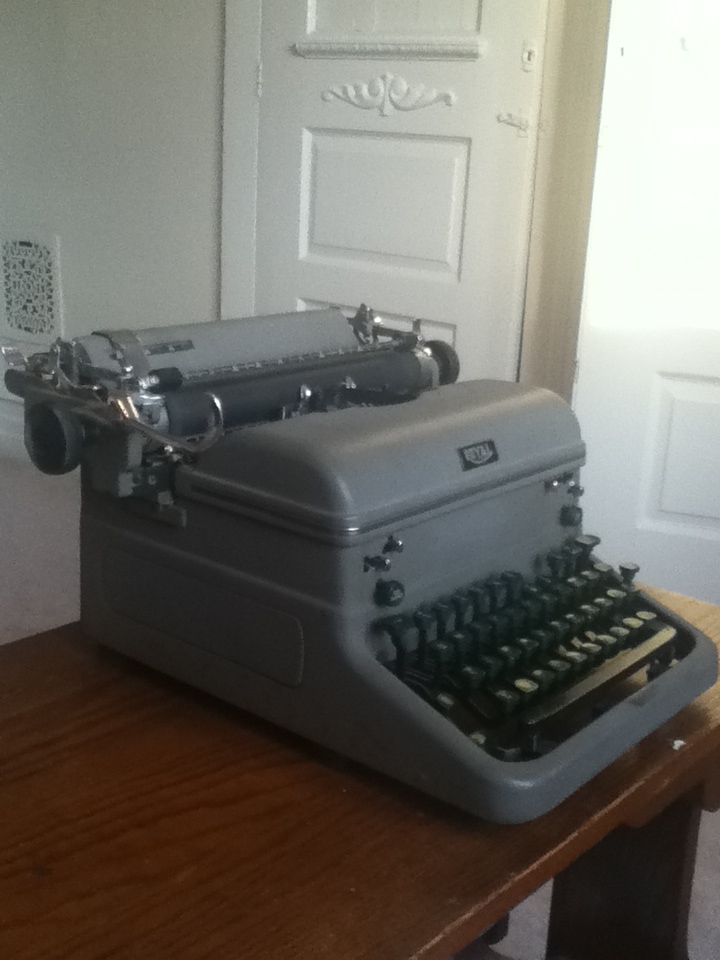
The Royal used to type up the text donated by writers for the project.

The Royal used to type up the text that writers donated for the project.

The 1,200 foot paper roll.

The 1,200 foot paper roll.

Ready to type.

Ready to type.

Good conditions for typing, though required sitting on the floor.

Good conditions for typing, though required sitting on the floor.

Scroll of text typed up and ready to go.

Scroll of text typed up and ready to go.